Real Rough beginnings to an explosion I am animating for fun. Out of animation work at the moment and spend most of my time doing 3d modeling for work, and in my free time math problems and trying to learn C++, so its fun to come back and do some fun special effects stuff for myself.
Hey folks, Paul here for MOTION MONDAY! I had fun making today’s GIFs… but this post might have killed my laptop. (Lots of quirks and crashes in the last 24 hours… always back up your work!)
Today’s focus is timing, specifically hang-time, and how it gives airborne objects a sense of gravity. I’m not gonna type much, so hopefully these GIFs speak for themselves. Enjoy!
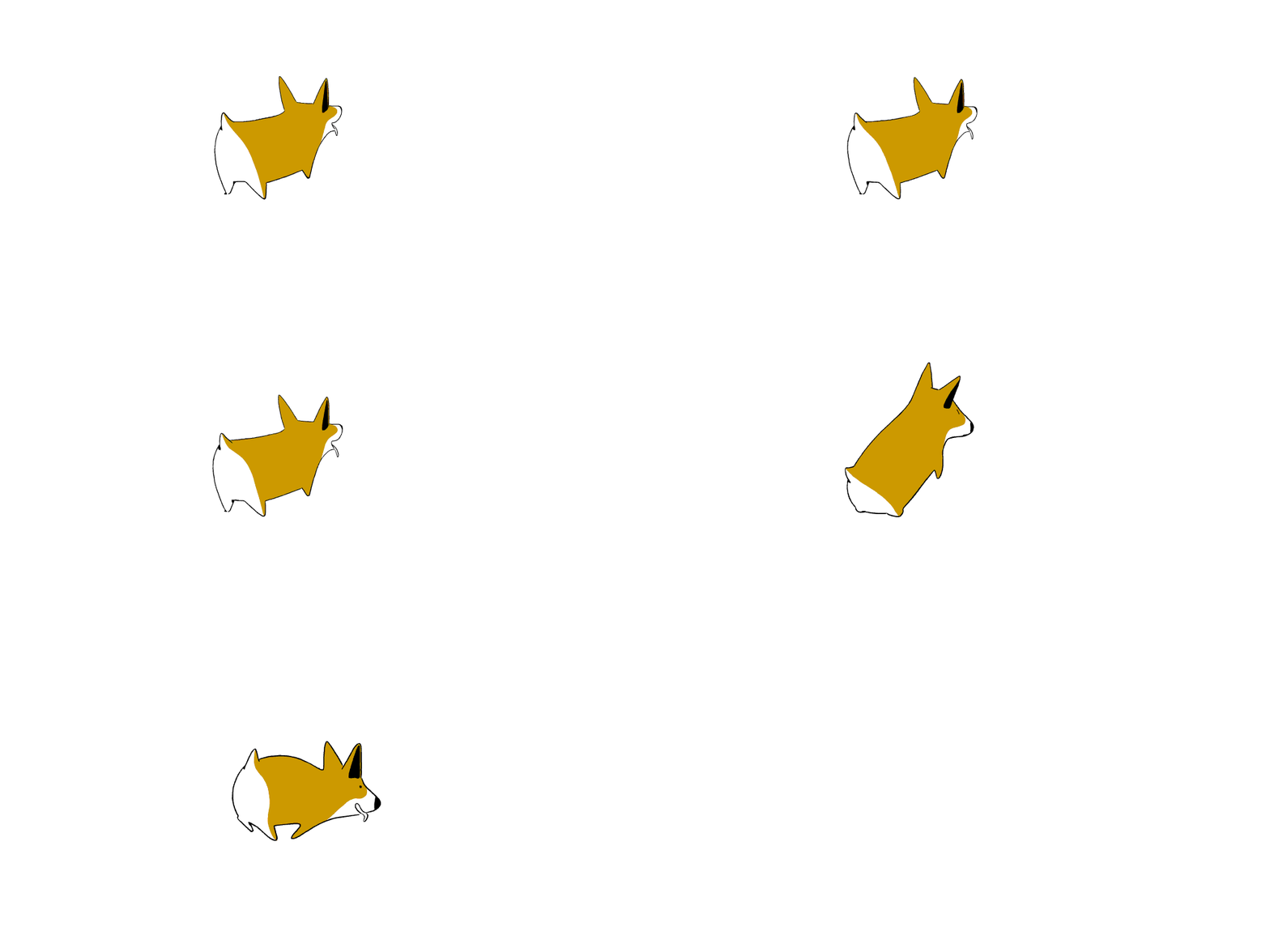
With hang-time:
Without hang-time:
[Expressions: you know this is wrong, why are you doing this Paul]
Hang-time is the main focus here, but there are also other factors to consider…
Follow-through: notice in the
top example, big baby Thundercluck
has extra fluidity because his body changes direction first, then his wings and tail change direction afterwards. This can add a lot of life to characters with hair, tails, scarves, etc.
Squash-and-stretch: again in the top example, Thundercluck stretches when he’s moving fast, and squashes when he slows down (mostly when Brunhilde catches him). This is often used on bouncing ball animations, but it can add life to characters, too!
Arc motion: this isn’t showcased by either example because Thundercluck’s only moving vertically. If he were also moving side to side, though, it’d be crucial for his path to follow an arc. (Think upside-down “U,” not right-side-up “A.”)
These are among Disney’s “12 Basic Principles of Animation.” I’m planning to demonstrate another principle next week, likely one of the three “other factors” listed right above. If anyone has a request, let me know!
Thanks for watching, and be sure to check back… on the next exciting episode of Chicken Ball Z MOTION MONDAY!
I mentioned on twitter that I wanted to do a lip sync tutorial and immediately got some people who were interested so I put one together real quick!
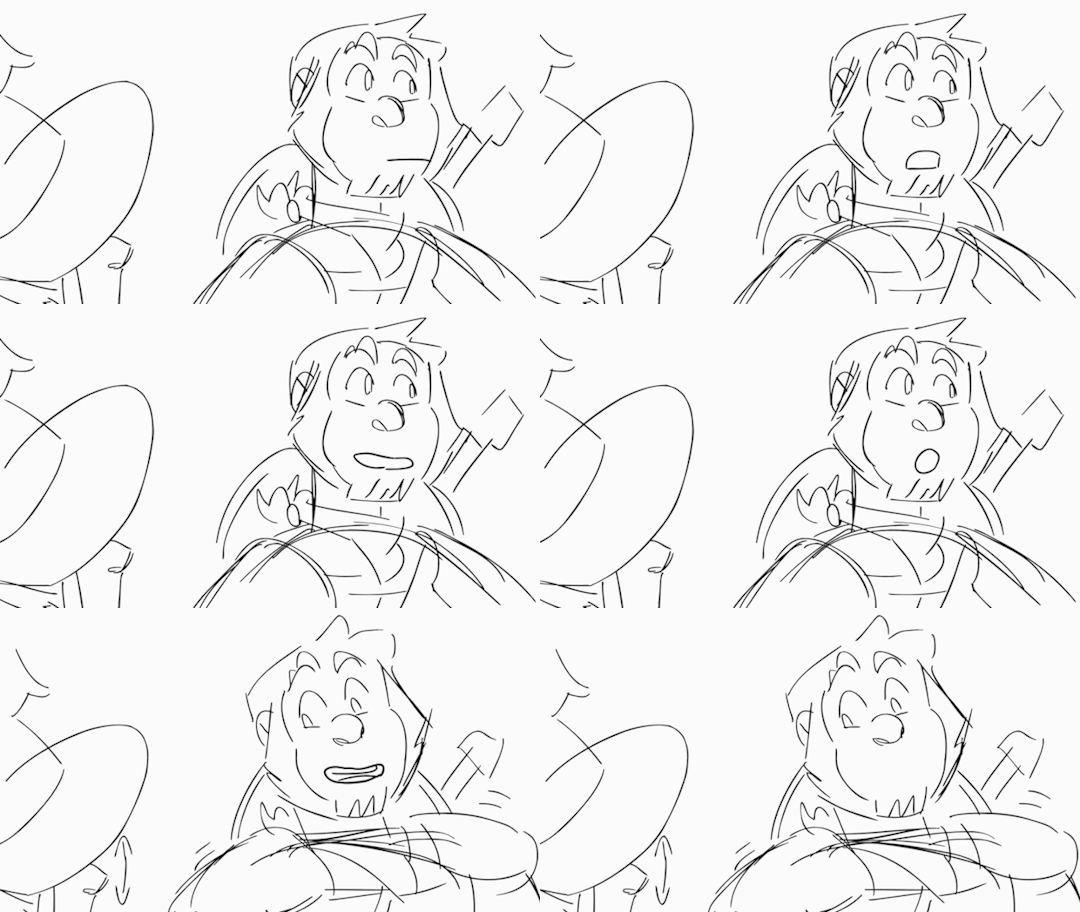
I’m going to use a bit of unfinished lip sync from my taz animated part as reference. They’re just gifs so no sound, but you should still be able to tell that he’s saying “I’d say a solid B… Solid B minus.”
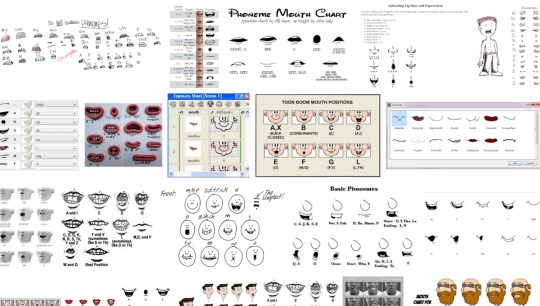
Anyone who’s looked up how to do lip sync has seen phoneme charts. Phonemes are just the shape your mouth makes when you make certain sounds.
When you do lip sync, you want some kind of reference to make sure it’s right
What’s easiest is to say it yourself and pay attention to the shapes your mouth is making. Since you’re going frame by frame, your audio is slow enough that you can make each shape slowly and distinctly and you can get each individual phoneme down in the animation.
Don’t do this.^
An easy way to tell if you’re animating lip sync wrong is if you run out of frames to make each shape. You don’t need them! Making each shape is unnatural. People talk quickly and the mouth doesn’t have the time to get into each shape. They blend together, sometimes to the point where the shape doesn’t change at all!
Not only does the 2nd gif take less frames and energy to make, it’s more relaxed, it looks less distracting, and his lips are much easier to read!
These are reference charts to show the differences more clearly
This is the difference between getting swallowed up in every last detail and paying attention to reality.
What matters more than hitting every syllable is making it look natural and flow with the acting. That’s why anime mouth flaps can work so well. A strong pose through the whole body matters more than one mouth shape.



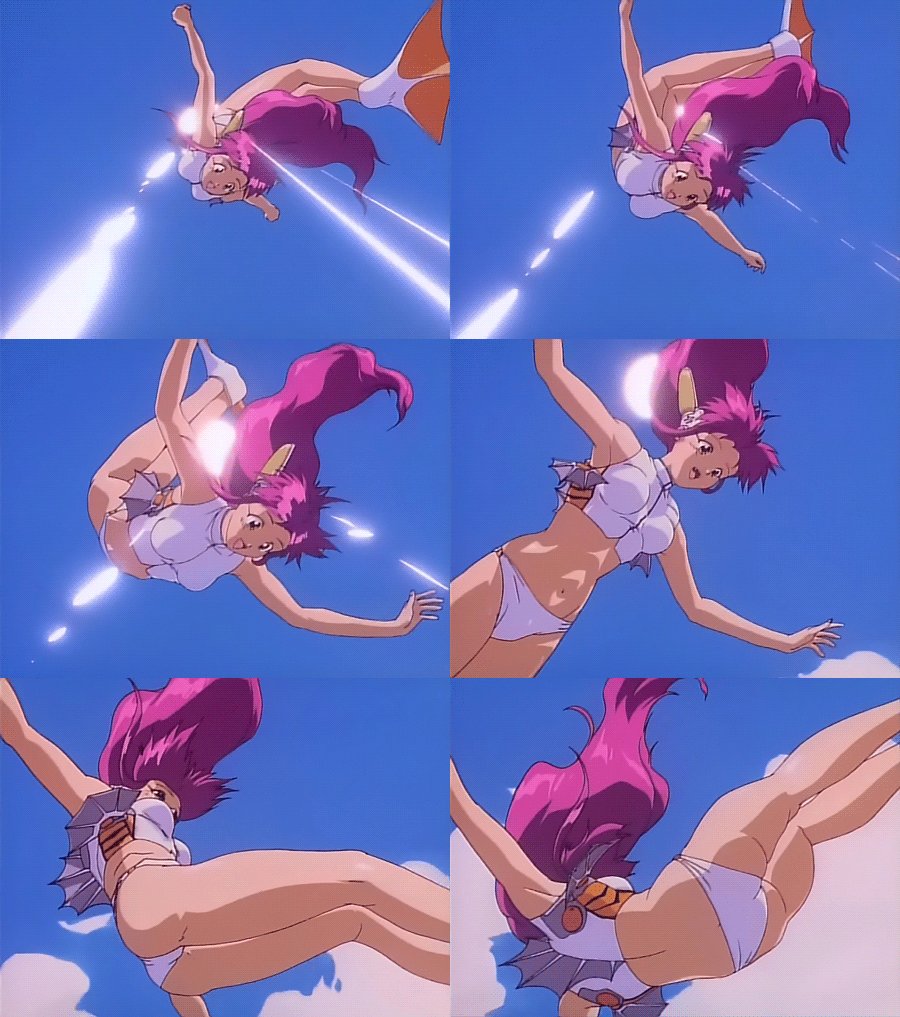





 Patata Paradaisu